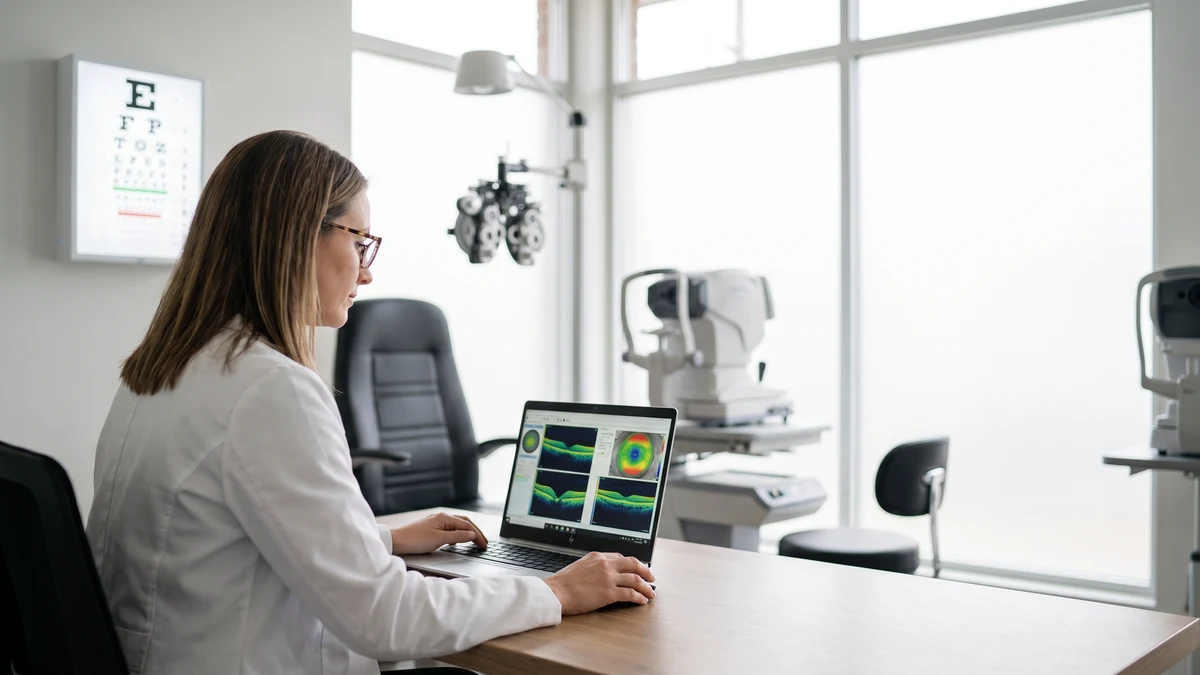
Optometric practices hold a category of patient data that is sometimes overlooked in HIPAA discussions: retinal images, OCT scans, corneal topography maps, visual field results, and detailed clinical records that are uniquely identifying and medically sensitive. These are Protected Health Information under HIPAA — and every time they're transmitted digitally, they require the same encryption protections as any other ePHI.
The American Optometric Association has been explicit on this point: optometric practices are HIPAA-covered entities, and breach exposure is a real and growing risk. The AOA's own cybersecurity guidance notes that "even the best prevention strategies cannot guarantee immunity from cyberattacks," and outlines the legal and financial accountability practices face when patient data is compromised (AOA, 2024).
With teleoptometry growing rapidly — the global tele-optometry market is expanding at 15%+ annually as remote vision screening and follow-up consultations become mainstream — the number of ePHI transmissions happening outside a clinical network environment is increasing. A VPN directly addresses this compliance gap.
What Counts as PHI in Optometry
HIPAA's definition of Protected Health Information in the optometric context is broader than many practitioners realize. Per the HIPAA Privacy Rule, PHI in optometry includes (Accountable HQ, 2026):
- Clinical data — diagnoses, spectacle and contact lens prescriptions, OCT/fundus images, visual field results, referral notes, and intraocular pressure measurements
- Administrative and financial data — insurance claims, billing records, eligibility checks, and scheduling details when tied to an individual
- Digital communications — patient portal messages, e-prescriptions, e-fax transmissions, and backups containing patient identifiers
- Diagnostic images — retinal photographs, corneal topography maps, and OCT scans are specifically called out as PHI when linked to a patient
Each of these data types, when transmitted over a network, requires encryption under 45 CFR § 164.312(e)(1) — the HIPAA Security Rule's technical safeguard for ePHI in transit. A VPN satisfies this requirement by encrypting all network traffic from the transmitting device, regardless of which application or platform is sending the data.
HIPAA-Compliant Encryption for Your Eye Care Practice
CyberFence encrypts all ePHI in transit with AES-256-GCM encryption — satisfying the HIPAA Security Rule technical safeguard requirement on every device your practice uses.
See PlansWhere Optometrists Are Most Exposed
Remote EHR and Practice Management Access
Cloud-based practice management systems (Eyefinity, Compulink Eyecare, RevolutionEHR, and similar platforms) are accessed over the public internet when practitioners work from outside the practice. Patient records, scheduling, billing, and clinical documentation all transmit over that connection. Without a VPN, that transmission is unencrypted at the network level — your ISP and anyone on the same network can see the connection metadata, and potentially the data itself if the platform's own encryption has gaps.
Teleoptometry Consultations
As remote vision screenings, post-operative follow-ups, and chronic disease monitoring (diabetic retinopathy screening, glaucoma follow-up) move to teleoptometry platforms, practitioners are conducting clinical sessions that transmit patient images and clinical findings over consumer internet connections. A VPN ensures those sessions are encrypted from the practitioner's device to the teleoptometry platform, regardless of what network they're using.
Multi-Location Practices
Optometric groups with multiple office locations often have staff or practitioners moving between sites. When connecting to the main practice management system from a satellite location over a general internet connection, that remote access must be encrypted. A VPN provides this encryption without requiring a dedicated MPLS or VPN hardware infrastructure.
Administrative Staff Working Remotely
Billing staff, front-desk staff handling appointment scheduling and insurance verification, and coding specialists who increasingly work remotely all access patient records and billing data that constitutes ePHI. Their remote connections must be encrypted. A Teams plan provides a VPN for every staff member accessing patient data from outside the practice network.
Diagnostic Image Transmission
Retinal photographs and OCT scans are large files that are frequently transmitted to co-managing physicians, specialists, or centralized reading centers — particularly in teleoptometry models for diabetic retinopathy screening. These transmissions involve identifiable patient PHI (images linked to patient records) and require encrypted transmission under HIPAA. A VPN encrypts the network layer of these transmissions.
HIPAA Security Rule Requirements That Apply
The specific HIPAA Security Rule provisions most relevant to optometric practices transmitting ePHI digitally:
- 45 CFR § 164.312(e)(1) — Encryption of ePHI in transit over open networks. A VPN satisfies this as the technical safeguard for all network transmissions.
- 45 CFR § 164.312(d) — Secure remote access to systems containing ePHI. Remote connections to EHR systems must use encrypted access controls.
- 45 CFR § 164.308(a)(5) — Protection from malicious software. CyberFence's Web Shield DNS filtering blocks malicious software distribution domains at the DNS level, contributing to this safeguard.
- Business Associate Agreements — Required with every vendor handling ePHI. Your EHR vendor, teleoptometry platform, and cloud storage provider all need BAAs. For Teams plan customers, CyberFence can provide a BAA on request.
What a VPN Specifically Does for an Optometric Practice
- Encrypts all ePHI in transit with AES-256-GCM encryption — satisfying 45 CFR § 164.312(e)(1) for every transmission from every device
- Secures remote EHR access — practitioners and staff connecting from home, satellite offices, or mobile devices get an encrypted tunnel to practice management systems
- Protects teleoptometry sessions — encrypts the network layer of remote consultation sessions, including any diagnostic images transmitted
- Web Shield DNS filtering — blocks phishing sites and ransomware distribution domains before they load; phishing attacks targeting healthcare practices are the primary initial access vector in most breaches
- Zero-log policy — no activity logs, no connection records, no DNS query history; patient session activity is never stored by CyberFence
- All 5 platforms — iOS, Android, macOS, Windows, Web App; every device used for patient care is covered under one subscription
- US-operated infrastructure — operated by Perez Technology Group, Orlando FL; no offshore data routing
For individual optometrists in private or group practice, CyberFence's individual annual plan ($88.21/yr, $7.35/mo) covers all personal devices. For multi-provider groups or practices with remote administrative staff, Teams plans provide per-seat coverage with compliance documentation and Breach Monitor included per seat.
Protect Your Patients' Visual Health Data
CyberFence encrypts ePHI on every device your practice uses. Individual plans from $7.35/mo. Teams plans for multi-provider groups with compliance documentation included.
Start Free Trial