Also on CyberFence: CyberFence's industry directory for other professions · CyberFence for Teams for business VPN with BAA and SSO .
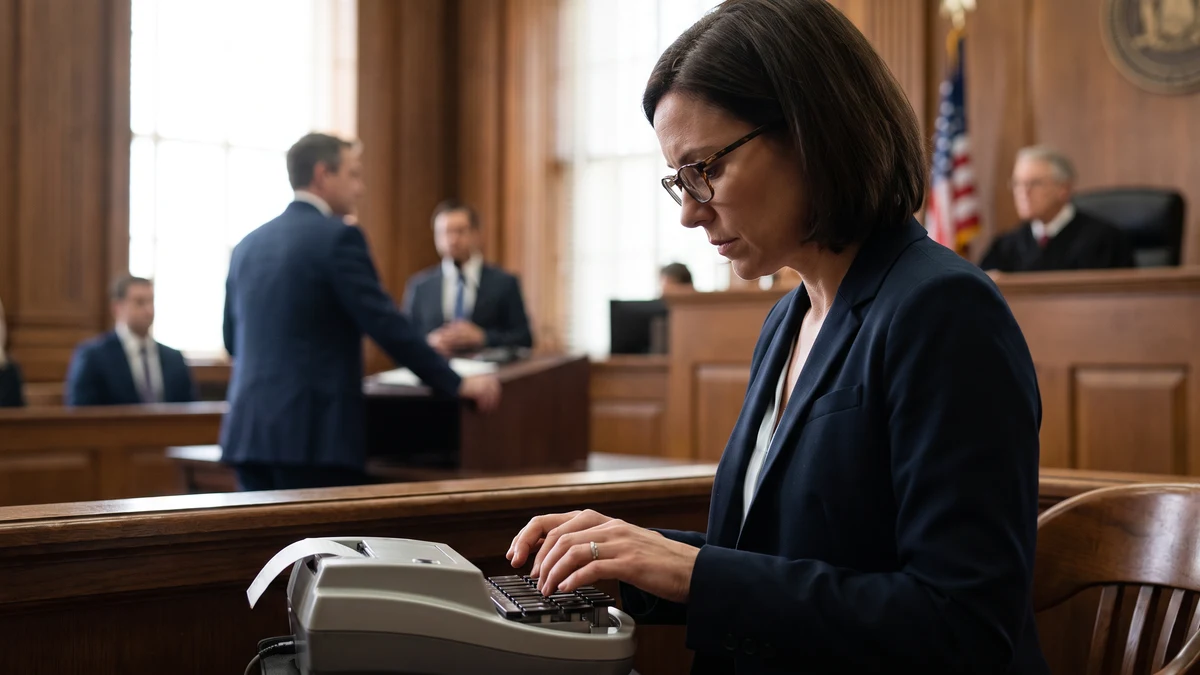
Court reporters are entrusted with some of the most legally sensitive recorded information that exists: verbatim testimony in criminal proceedings, civil depositions containing trade secrets and proprietary business information, medical malpractice depositions with detailed patient health records, sealed testimony in cases involving minors, and attorney-client communications recorded during depositions. That information gets transmitted, edited, proofread, and delivered — often over public or home Wi-Fi networks that offer no protection for its confidentiality.
The NCRA Code of Professional Ethics requires court reporters to maintain the confidentiality of all information obtained in the course of their work. That ethical obligation doesn't stop at the courtroom door. It follows transcripts onto laptops, into home offices, to coffee shops where reporters do transcript editing between assignments, and onto the hotel networks used during depositions in distant jurisdictions. A VPN is the encryption layer that makes it possible to fulfill that confidentiality obligation across every network a court reporter works from.
What Court Reporters Transmit and Store Remotely
The modern court reporter's workflow is substantially digital and frequently remote. A typical day or week may include:
- Transcript delivery platforms — Court reporters submit completed transcripts to law firms, deposition services, and courts through cloud-based platforms (Planet Depos, Veritext, US Legal Support, Esquire Deposition Solutions, TransPerfect). These platforms contain verbatim testimony for every case in a reporter's active workload — often dozens of depositions simultaneously.
- CAT (Computer-Aided Transcription) software — Eclipse, CaseCatalyst, and other CAT software sync rough drafts, scopist notes, and completed transcripts via cloud storage. A reporter's CAT files at any given time may contain multiple in-progress depositions across different cases, all containing testimony that is not yet part of the public record.
- Secure transcript portals — Attorneys and parties access transcripts through secure portals. Court reporters set up and manage these access links, often from home offices or hotel rooms during multi-day depositions.
- Rough draft delivery — Same-day rough draft delivery via email or secure transfer platform is standard for complex depositions. These rough drafts contain unverified testimony that has heightened sensitivity precisely because they haven't been certified.
- Video synchronization files — For video depositions, audio-video synchronization files that pair transcript text with recorded video are transmitted to parties. These files combine verbatim testimony with the visual record of the deponent.
- Exhibit handling — Exhibits marked during depositions — medical records, financial documents, contracts, internal communications — are scanned, stored, and transmitted as part of the transcript record.
Why the Legal Standard Demands Encryption
Court reporters operate under multiple layers of legal and ethical obligation regarding transcript confidentiality. Understanding what's at stake makes the case for encryption clear:
Sealed proceedings and protective orders: Testimony and depositions subject to protective orders have court-ordered confidentiality requirements. A reporter transmitting sealed testimony over an unencrypted connection could be construed as a breach of the protective order itself, with potential contempt exposure for the parties and professional liability for the reporter.
Medical deposition content: Depositions in medical malpractice, personal injury, and workers' compensation cases contain detailed PHI — patient diagnoses, treatment records, physician notes read into the record, and medical opinions about specific individuals. Court reporters who handle these depositions are in the chain of custody for PHI, and transmission security requirements apply to that content.
Trade secret and proprietary information: Commercial litigation depositions frequently involve confidential business information — financial records, product specifications, internal communications, pricing data — that is subject to confidentiality designations under protective orders. Transmitting this content over unsecured connections creates risk of interception that could constitute a confidentiality breach under the applicable court order.
Criminal proceedings: In criminal cases, premature disclosure of testimony could compromise ongoing investigations, prejudice jury pools, or expose witnesses who have not yet been identified publicly. Court reporters who transmit criminal testimony over public Wi-Fi without encryption create unnecessary risk of interception.
Protect Every Transcript You Transmit
CyberFence encrypts all transcript transmissions with AES-256-GCM encryption — hotel networks during multi-day depositions, home offices, coffee shops, anywhere you work. US-operated, zero logs, HIPAA-aligned.
See Plans →Hotel Networks During Multi-Day Depositions
Complex litigation depositions frequently span multiple days, requiring court reporters to travel and work from hotel rooms in the evenings — editing transcripts, delivering rough drafts, and managing exhibits. Hotel Wi-Fi is among the most targeted public network environments for credential interception and session hijacking.
Microsoft issued a warning in 2026 documenting that sophisticated attackers specifically target business travelers staying at hotels, intercepting Wi-Fi connections during check-in and setup to harvest credentials. Court reporters fitting this profile — business travelers accessing sensitive professional platforms from hotel rooms — are precisely the target audience for these attacks.
A VPN creates an encrypted tunnel from the reporter's laptop through the hotel network to the VPN server, making all transcript platform logins, CAT software sync operations, and rough draft transmissions invisible to anyone monitoring the hotel network. The hotel router sees only encrypted traffic flowing to a VPN server — not which platforms are being accessed or what is being transmitted.
Scopist and Proofreader Collaboration Security
Most court reporters work with scopists (editors who clean up rough CAT output) and proofreaders on a contract basis. This collaboration involves transmitting in-progress transcript files containing unsealed, uncertified testimony across the internet — typically via cloud storage or email. Each point in that workflow is a potential interception opportunity.
When a reporter sends a rough transcript file to a scopist via email or uploads it to a shared cloud folder from a coffee shop Wi-Fi connection, that transmission travels over whatever network is available at that moment. AES-256-GCM encryption from a VPN wraps that transmission before it reaches the coffee shop router, ensuring the testimony it contains can't be intercepted in transit.
CyberFence's Web Shield for Legal Phishing
Court reporters are targeted by phishing campaigns specifically because they sit at the intersection of legal proceedings and digital delivery. Common attack patterns include:
- Fake deposition scheduling platforms — emails impersonating Veritext, Planet Depos, or Esquire requesting login to view a new assignment or accept a scheduling change
- Fake court filing portal notices — messages impersonating state or federal court systems requesting credential verification
- Fake attorney firm portals — messages appearing to come from law firms requesting access to a specific transcript portal
- Fake CAT software update prompts — messages impersonating Eclipse or CaseCatalyst with urgent security update links
CyberFence's Web Shield DNS filtering blocks known phishing domains before the browser loads the page — protecting against these attacks even when the reporter clicks a link in an email that appears entirely legitimate. The block happens at the DNS layer, before any page content is returned.
What CyberFence Provides for Court Reporters
- AES-256-GCM encryption on all connections — hotel networks during multi-day depositions, home offices, coffee shops, courthouse Wi-Fi, anywhere a transcript is transmitted
- Transcript platform login protection — Veritext, Planet Depos, US Legal Support, Esquire, and other deposition service portals protected from credential interception
- CAT software sync security — Eclipse, CaseCatalyst, and cloud storage sync operations encrypted in transit
- Web Shield DNS filtering — blocks phishing domains impersonating deposition services, court portals, and law firm platforms
- Zero-log policy — no record of which cases, platforms, or firms you accessed; transcript confidentiality extends to your VPN provider
- US-operated infrastructure — data stays under US law; consistent with federal and state court confidentiality requirements
- Auto-connect on untrusted networks — activates automatically on hotel Wi-Fi, coffee shop networks, and courthouse Wi-Fi before any platform login
- All devices covered — laptop, tablet, and phone under one plan; covers every device used in the transcript workflow
Court reporters take an oath. Their professional certification, their relationship with attorneys and courts, and the integrity of the legal record they create all depend on maintaining the confidentiality of everything they capture. Encrypting the networks used to transmit that record is the technical expression of that oath — and a straightforward professional obligation for anyone handling sealed testimony, medical depositions, or trade secret litigation.
Protect the Record — Start Your Free Trial
Download CyberFence from the App Store or Google Play. AES-256-GCM encryption, Web Shield phishing protection, auto-connect on hotel and public Wi-Fi, zero logs. Try it free today.
View Plans →Want to go deeper? Read how CyberFence protects other regulated industries , the CyberFence Teams product page , or CyberFence plans and pricing .