Also on CyberFence: CyberFence's industry directory for other professions · CyberFence for Teams for business VPN with BAA and SSO .
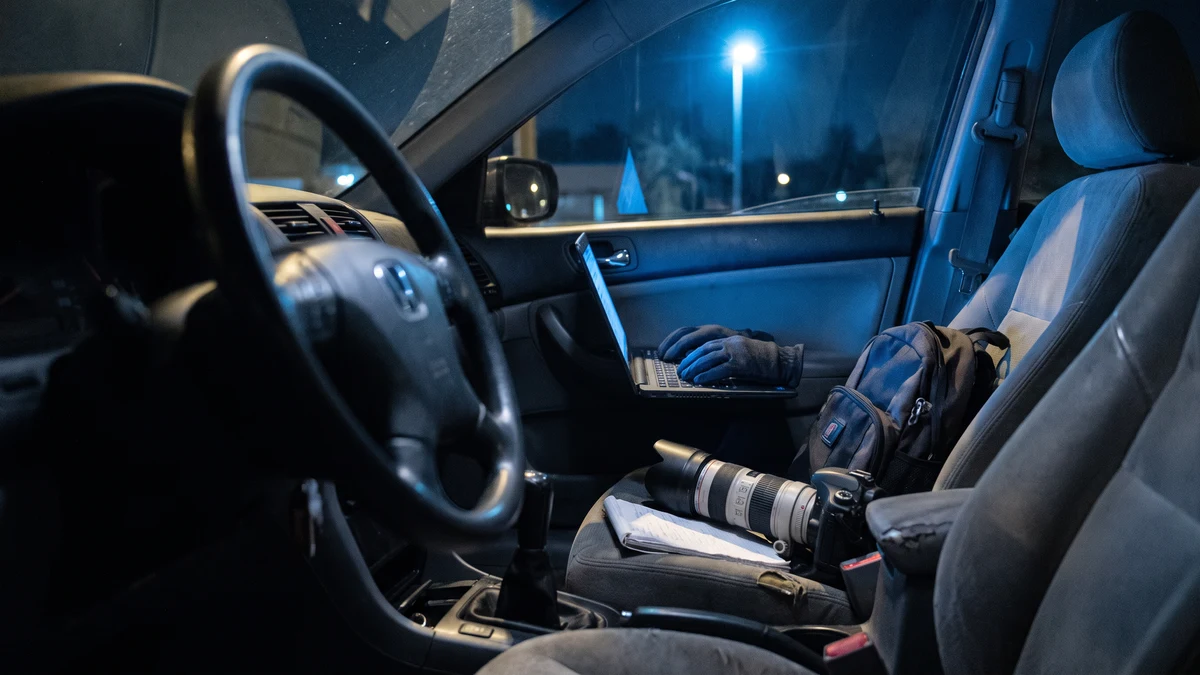
Private investigators don't work from a single office with a locked-down network. The job happens from a parked car outside a subject's house, a courthouse hallway between filings, a hotel room during an out-of-town case, or a coffee shop while writing up a surveillance report on deadline. Every one of those locations means connecting to a network you don't control — and every file on that laptop is something you're legally obligated to keep confidential.
That combination — a strict duty of confidentiality plus constant work on unsecured networks — makes private investigators one of the higher-stakes professions when it comes to basic connection security, even though most PI firms are small operations without a dedicated IT department.
Confidentiality Isn't Optional — It's the Law
Most states that license private investigators write confidentiality directly into the statute, not just into a professional code of ethics. Texas law prohibits a licensed investigator from disclosing information obtained for a client except at the client's direction or as required by law. Michigan makes it a misdemeanor for a licensee or employee to divulge client information to anyone other than the client, with license suspension or revocation as a possible penalty. Florida's investigator statute similarly bars licensees from releasing the contents of an investigative file to anyone but the client. California's Private Investigator Act imposes a duty of confidentiality that can lead to license discipline for violations, on top of any civil exposure.
In practice, this means a data breach for a PI firm isn't just a business problem — it's a licensing problem. A compromised laptop containing an active case file, a client's home address, financial records, or surveillance photos can expose the investigator to disciplinary action from the state licensing board on top of everything else.
Where the Exposure Actually Happens
Surveillance From a Parked Car
Long surveillance shifts often mean tethering to a phone's mobile hotspot or, in areas with weak cellular coverage, connecting to whatever open Wi-Fi is nearby — a gas station, a nearby business, a public hotspot. Uploading photos or writing case notes over an unsecured connection puts that data in the path of anyone else on the same network.
Courthouses, Records Offices, and Client Meetings
Public records research and client meetings frequently happen away from the office, often on courthouse or municipal building Wi-Fi — networks that are shared with the general public and not built with confidentiality in mind. Pulling up a case file or a client's personal information on a network like that is a routine part of the job, not an edge case.
Hotel Wi-Fi on Out-of-Town Cases
Skip tracing, process serving, and multi-day surveillance cases often require travel. Hotel networks are a well-documented target for man-in-the-middle attacks, and an investigator reviewing a case file or filing a report from a hotel room is exposing exactly the kind of information state confidentiality statutes are built to protect.
Every network you work from should be encrypted, not just the office one. CyberFence gives you AES-256-GCM encryption on every device, so case files stay protected whether you're in a parked car or a hotel room.
See CyberFence Plans →Referrals Run on Trust, and Trust Runs on Discretion
Most PI work comes through referrals — attorneys sending case work, insurers assigning claims investigations, or one client recommending an investigator to another. That referral pipeline depends entirely on a reputation for discretion. An attorney who learns that a subcontracted investigator's laptop was compromised on hotel Wi-Fi during a case isn't just worried about that one file — they're re-evaluating whether to send any future work at all. For a business built on repeat referrals rather than advertising, a single preventable data exposure can be more costly than the case itself was worth.
This is also increasingly showing up before the work even starts. Law firms and insurance companies that regularly retain investigators are beginning to ask, directly, how case data is transmitted and stored — particularly for remote and field-based work. Being able to answer that a VPN with strong encryption runs on every device used for casework is a straightforward, credible answer. Not having one is a harder conversation to have after a client has already asked the question.
What Cyber Insurers Are Already Telling PIs
The private investigation industry has quietly become a cyber-insurance growth market. Cyber liability coverage for investigation firms is now one of the fastest-growing segments in PI insurance, and industry analysts point to the shift toward digital case management, cloud storage, and remote research as the reason. Annual cyber liability premiums for individual investigators and small agencies commonly run from roughly $1,500 to $8,000, and standard general liability policies typically exclude investigator-specific activities like surveillance and evidence handling entirely — meaning a dedicated cyber policy, and the basic technical safeguards that go with it, isn't optional if you want real coverage.
Insurers underwriting that risk are looking at the same thing a state licensing board is: whether the firm has taken reasonable technical steps to protect client data in transit and at rest. Encrypting your connection with a VPN is one of the most straightforward of those steps to put in place.
What to Look for in a VPN for This Work
- AES-256-GCM encryption — encrypts case files, photos, and reports in transit on every network, so an intercepted connection on courthouse or hotel Wi-Fi doesn't hand over readable data.
- A verified zero-log policy — you have a legal duty not to disclose client information; a VPN provider that logs your traffic is a third party with visibility into exactly the connections you're obligated to keep confidential.
- US-operated infrastructure — keeps your traffic off servers subject to foreign data-retention laws, which matters when the underlying case files themselves are subject to US state confidentiality statutes.
- A kill switch — automatically cuts your connection if the VPN drops, so a momentary disconnection during a mobile hotspot handoff doesn't expose case data unencrypted.
- Coverage across every device — laptop, phone, and tablet under one subscription, since case work moves across all three depending on where you are.
Confidentiality is the job. CyberFence protects every device you use for case work — laptop, phone, and tablet — with AES-256-GCM encryption, a Kill Switch, and a strict zero-log policy. Starting at $7.99/mo.
Protect Your Casework →The Bottom Line
The confidentiality duty that comes with a PI license doesn't pause when you're working from a car, a courthouse, or a hotel room — and neither should the encryption protecting the data you're legally required to keep secret. A VPN with strong encryption and a verified no-logs policy is a small, inexpensive addition to a workflow that already involves cameras, notepads, and long hours in unfamiliar locations — and it closes one of the most common, least-discussed gaps in how case data actually moves in this line of work.
Want to go deeper? Read how CyberFence protects other regulated industries , the CyberFence Teams product page , or CyberFence plans and pricing .