Also on CyberFence: CyberFence's industry directory for other professions · CyberFence for Teams for business VPN with BAA and SSO .
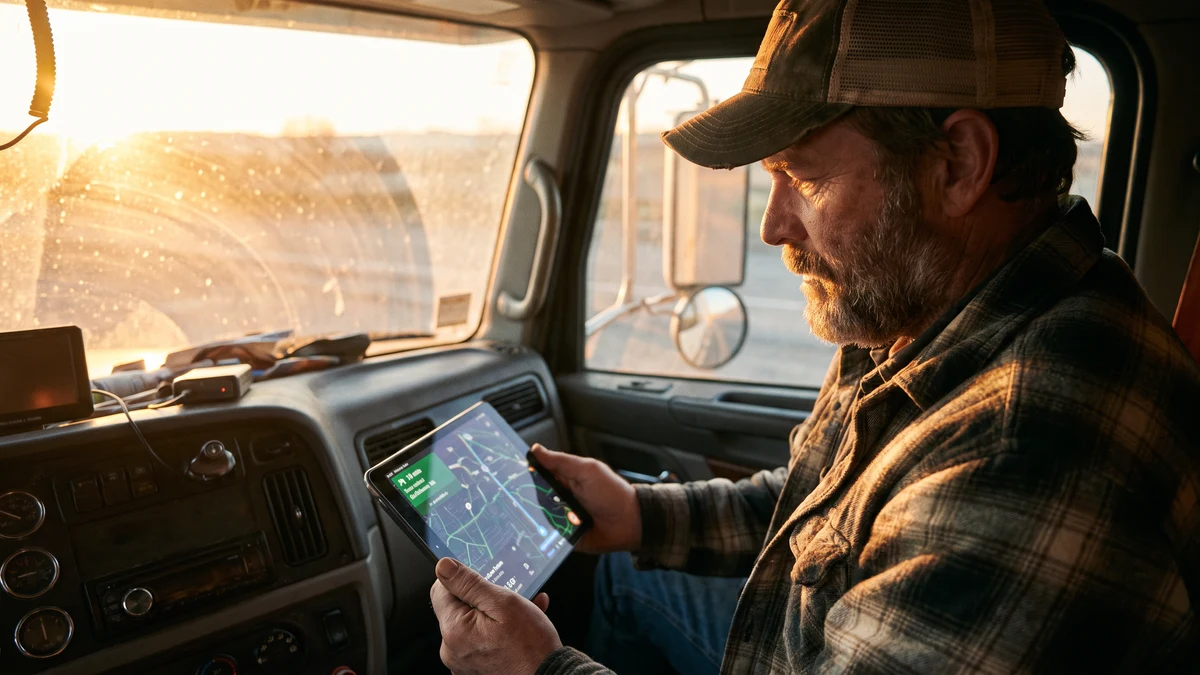
Every professional truck driver in the US is required to use an Electronic Logging Device. That ELD connects to the truck's engine control unit, logs hours of service, records location, tracks speed, and syncs with fleet management software in real time. It's also a computer — one that connects to networks, transmits data, and interacts with dispatch platforms, carrier portals, and load boards. And it does most of that work over whatever Wi-Fi is available at the next truck stop.
Cybersecurity has become a genuine operational concern for trucking. Researchers continue to find vulnerabilities in ELD systems that go beyond compliance paperwork: compromised ELDs have leaked real-time GPS coordinates, exposed driver personal data, and in documented cases allowed false signals to reach engine management systems. The data these devices carry — CDL numbers, driver IDs, hours-of-service records, payroll account details — is exactly what identity thieves and freight fraud operators target.
What Truck Drivers Access on Public Networks
The digital footprint of a working truck driver is larger than most people realize. A typical day on the road involves:
- Fleet management portals — DAT TruckersEdge, Samsara, KeepTruckin/Motive, PeopleNet, Omnitracs. These platforms hold your HOS records, driver profile, CDL information, vehicle assignment, and load history. Accessing these from a truck stop Wi-Fi exposes your login credentials and session to anyone monitoring that network.
- Load boards and dispatch apps — DAT Load Board, Truckstop.com, 123Loadboard, Convoy, Uber Freight. These platforms contain your MC number, authority information, and in many cases direct communication channels with brokers and shippers. Broker fraud operations actively monitor these channels, and stolen credentials enable freight fraud attacks that cost the trucking industry hundreds of millions annually.
- Payroll and settlement systems — Many carriers use third-party payroll platforms (Comdata, EFS, T-Chek) for fuel cards and driver settlements. These systems hold your banking information, direct deposit routing details, and fuel card PINs. A compromised payroll login is a direct path to redirected pay.
- ELD and FMCSA portals — The FMCSA portal and ELD vendor platforms store your CDL number, medical certificate status, driving history, and violation records. CDL information is a high-value target for synthetic identity fraud — your CDL number combined with other stolen personal data can be used to set up fraudulent trucking companies, take out loans, or commit insurance fraud in your name.
- Personal accounts — Email, banking, insurance portals, all accessed from the cab during mandatory rest periods. The same public Wi-Fi that supports your work access also handles your personal sessions.
The Truck Stop Wi-Fi Problem
Truck stops are one of the most heavily trafficked public Wi-Fi environments in the country. Pilot Flying J, Love's, TravelCenters of America, and Petro locations serve thousands of drivers daily, and their Wi-Fi networks reflect that volume — large, open, shared, and routinely unsecured at the network level.
The core risk is simple: when hundreds of people share the same network, any device on that network can potentially monitor the traffic of other devices. An attacker parked in the lot with a laptop and basic network monitoring tools can capture authentication tokens from drivers logging into fleet portals, load boards, and dispatch apps. This technique — sometimes called a man-in-the-middle attack — doesn't require breaking any encryption on the platforms themselves. It intercepts the session data during transmission between your device and the network before encryption kicks in, or exploits misconfigured connections where encryption is absent entirely.
ELD systems compound this risk. Many ELD units maintain persistent cellular connections, but drivers also connect tablets and phones to truck stop Wi-Fi for app updates, dispatch check-ins, and personal use. If the tablet used for dispatch work connects to an unsecured truck stop network without a VPN, every login on that device during that session is potentially visible.
Protect Every Login at Every Truck Stop
CyberFence encrypts all traffic from your phone, tablet, and laptop with AES-256-GCM encryption — Pilot Flying J, Love's, TA, hotel rooms, wherever you connect. One plan, all your devices.
See Plans →Freight Fraud and Broker Impersonation
Freight fraud has become one of the fastest-growing financial crimes in trucking. The scheme typically works like this: an attacker obtains a carrier's MC number and DOT information (available publicly through the FMCSA database), creates a fraudulent broker identity, contacts shippers with attractive rates, collects payment for loads that are never picked up, and disappears. More sophisticated versions involve stealing carrier credentials from load boards to redirect existing freight.
Stolen dispatch credentials — load board logins, carrier portal access, freight broker accounts — are the entry point for many of these attacks. When a driver's DAT or Truckstop.com credentials are compromised over public Wi-Fi, those credentials can be used to impersonate the carrier, accept loads, and commit freight fraud. The driver and carrier are left with the liability, the chargeback, and the damage to their authority rating.
CyberFence's AES-256-GCM encryption ensures that load board logins, dispatch credentials, and broker communication sessions are encrypted from the driver's device to the VPN server — invisible to anyone monitoring the truck stop network. The session can't be intercepted and the credentials can't be harvested.
Phishing Targeting Drivers and Owner-Operators
Owner-operators are targeted by phishing campaigns specifically designed around trucking workflows. Common attack patterns include:
- Fake FMCSA compliance notices — emails or text messages claiming a CDL renewal, medical certificate, or ELD compliance issue requires immediate action via a linked portal. The link goes to a credential-harvesting page.
- Fake load offers — messages through load boards or email impersonating legitimate brokers with high-paying loads, requiring the driver to log into a spoofed carrier portal to accept.
- Fake factoring company alerts — messages impersonating freight factoring companies (OTR Capital, RTS Financial, Triumph Business Capital) claiming invoice disputes or payment holds, directing drivers to fraudulent login pages.
- Fuel card phishing — fake Comdata, EFS, or Mudflap alerts claiming account suspension or unusual activity, directing to credential-harvesting pages.
CyberFence's Web Shield DNS filtering blocks connections to these phishing domains before the browser loads the page. When a driver receives a link to a fake FMCSA compliance portal or counterfeit factoring company login, Web Shield checks the domain against threat intelligence databases and blocks the connection at the network layer — regardless of what app or browser the link was opened in.
CDL Identity Theft: A Growing Problem
Commercial driver's license information is a high-value target for identity thieves specifically because CDLs enable commercial activity that's difficult to undo. A CDL number combined with a driver's personal information can be used to register fraudulent trucking companies with the FMCSA, obtain commercial insurance policies in the driver's name, take out equipment loans, and create shell carrier operations. Victims often don't discover the fraud until they receive notices from the FMCSA, collection agencies, or law enforcement.
FMCSA portal credentials — the login that accesses your driving record, medical certificate history, and authority information — are the key to this fraud vector. Protecting those credentials with encrypted connections on every network is a first-line defense against CDL identity theft.
What CyberFence Covers for Truck Drivers
- AES-256-GCM encryption on all connections — Pilot Flying J, Love's, TA/Petro, hotel Wi-Fi, weigh station lounges, anywhere you connect
- Dispatch and load board login protection — DAT, Truckstop.com, KeepTruckin/Motive, Samsara, and all fleet portal sessions encrypted in transit
- Web Shield DNS filtering — blocks phishing domains impersonating FMCSA, factoring companies, fuel card providers, and freight brokers
- Payroll and fuel card session security — Comdata, EFS, T-Chek logins protected from interception on shared networks
- Auto-connect on untrusted networks — activates when connecting to public Wi-Fi before any app opens; no manual step required
- All devices covered — phone, tablet, and laptop under one plan; covers every device used in the cab or at the stop
- Zero-log policy — no record of what platforms or portals you accessed; your route data and business information stay private
- US-operated infrastructure — your data stays under US law; consistent with FMCSA and DOT regulatory environment
Truck stop Wi-Fi is a professional tool for every driver on the road — necessary for dispatch, compliance, and operations. Using it without encryption is the equivalent of leaving your logbook and payroll information on the dashboard where anyone in the lot can read it. CyberFence encrypts every session so you can do your job on whatever network is available without handing your credentials to whoever else happens to be parked nearby.
Secure Every Truck Stop Login — Start Your Free Trial
Download CyberFence from the App Store or Google Play. AES-256-GCM encryption, Web Shield phishing protection, auto-connect on public Wi-Fi, all your devices on one plan. Try it free — no web sign-up required.
View Plans →Want to go deeper? Read how CyberFence protects other regulated industries , the CyberFence Teams product page , or CyberFence plans and pricing .