Plumbers, electricians, HVAC technicians, roofers, and other trades contractors don't think of themselves as cybersecurity targets. But attackers don't care what industry you're in — they care that you have customer credit card numbers, bank account details, and a phone full of unprotected business data.
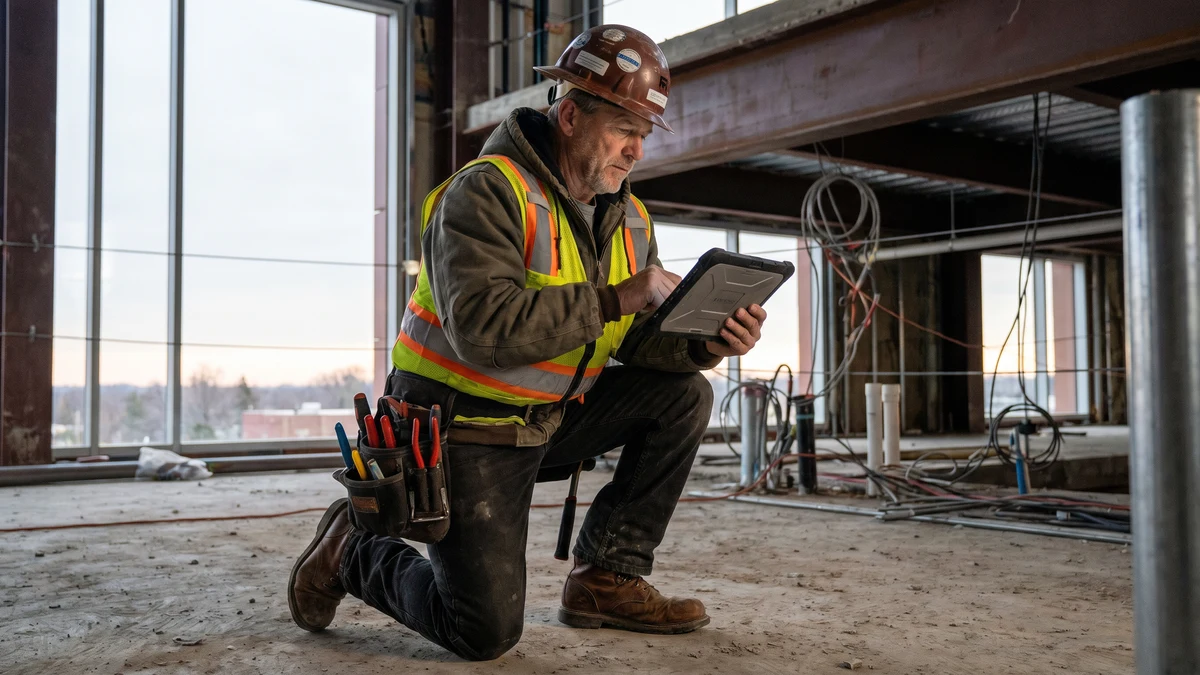
Trades contractors are increasingly running their businesses on mobile devices in the field. Scheduling apps, payment processing, invoicing, and customer communication all happen on a phone or tablet — often connected to whatever Wi-Fi is available at a job site, a supply house, or a coffee shop. That's exactly the kind of environment attackers exploit.
The Data Your Business Actually Holds
Think about what moves through your phone and tablet on a typical workday:
- Customer names, addresses, and phone numbers — stored in your scheduling app and CRM
- Credit card numbers and payment data — processed through Square, Stripe, or another mobile payment system
- Bank account details — for invoicing and deposits
- Vendor accounts and pricing — wholesale pricing you don't want competitors to see
- Business email — contracts, supplier agreements, customer communications
- Employee records — if you have a crew, their personal and payroll information lives in your systems
A single breach exposing any of this can result in credit card fraud for your customers, wire fraud targeting your business bank account, or identity theft using employee data. For a small trades business operating on thin margins, a fraud incident can be financially devastating.
Why Trades Contractors Are Particularly Vulnerable
Constant Movement Between Networks
An office worker connects to one trusted network all day. A plumber might connect to a customer's Wi-Fi to pull up a job order, a supply house's open network to check inventory, and a fast food restaurant's hotspot over lunch. Each new network is an unknown — and attackers can set up rogue Wi-Fi hotspots in these exact locations to intercept unencrypted traffic.
Mobile Payments on Untrusted Connections
Processing a credit card payment through a mobile reader while connected to a customer's unverified home Wi-Fi or a supply store's open network is a real risk. If that connection isn't encrypted, payment data can theoretically be intercepted in transit. A VPN ensures every byte of that transaction is encrypted before it leaves your device.
No IT Department
Most trades businesses don't have an IT professional on staff. There's no one configuring network security, reviewing vendor access, or monitoring for unusual account activity. The burden falls entirely on the business owner — and most are too busy running jobs to think about cybersecurity until something goes wrong.
Invoice and Payment Fraud Targeting Small Contractors
One of the most common scams targeting small contractors is invoice fraud: an attacker compromises a business email account and, when a large payment is due, sends a modified invoice with a different bank account number. The customer pays the fraudulent account. By the time anyone realizes what happened, the money is gone.
This attack requires access to your email — often gained by intercepting login credentials on an unsecured Wi-Fi connection.
Protect Every Job Site Connection
CyberFence encrypts every connection your business devices make — at customer sites, supply houses, or anywhere you work. US-operated, zero logs, built for small business.
See Plans →What a VPN Does for Your Trades Business
Encrypts Every Connection, Everywhere You Work
A VPN creates an encrypted tunnel between your device and the internet. Even if you're connected to a customer's home Wi-Fi, a supplier's open network, or a public hotspot, everything you send and receive is protected by AES-256-GCM encryption — the same standard used to protect government data. An attacker intercepting your connection gets nothing usable.
Protects Payment Processing in the Field
When you run a credit card through a mobile reader, that transaction data needs to travel from your phone to the payment processor securely. A VPN ensures that path is encrypted regardless of what network you're on. Your customers' payment data stays protected even when you're processing on a job site with uncertain Wi-Fi.
Secures Your Business Email
Your business email is the key to everything else — vendor accounts, customer relationships, payment confirmations. A VPN protects your email login credentials from being intercepted when you check email on unfamiliar networks. Combined with two-factor authentication on your email account, it dramatically reduces the risk of account takeover.
Blocks Malicious Sites at the DNS Level
CyberFence includes Web Shield — a DNS filtering layer that blocks connections to known malicious domains before your device ever makes contact. If you or an employee accidentally clicks a phishing link while on the job, Web Shield can block the connection before any malware is downloaded. For a one-person or small-crew operation with no IT backup, that automatic protection matters.
A Realistic Day in the Field — With and Without a VPN
Without a VPN: You arrive at a job, connect to the customer's Wi-Fi to pull up the work order. You process their credit card when the job is done. You check your business email from your truck on lunch. Each of these connections happens in the clear — potentially visible to anyone on the same network or positioned to intercept Wi-Fi traffic nearby.
With a VPN: Every one of those same actions happens through an encrypted tunnel. The customer's Wi-Fi, the coffee shop hotspot, the supply house network — none of them can see your traffic. Your payment data, email credentials, and business communications are protected regardless of what network you're on.
The practical difference in your workflow? You turn on the VPN app when you start your day and forget about it. It runs in the background. The protection is automatic.
CyberFence for Trades Contractors
CyberFence is a US-based VPN and cybersecurity platform built for individuals and small businesses. For trades contractors specifically:
- Mobile-first design — works seamlessly on iPhone and Android, the devices you actually use in the field
- AES-256-GCM encryption on every connection
- Web Shield DNS filtering — blocks malicious sites automatically
- Zero-log policy — CyberFence never records what you access or where you connect from
- US-operated infrastructure — not a foreign company with different data laws
- Simple setup — no technical expertise required; connect with one tap
For contractors with a crew, CyberFence offers team plans that let you add employees and manage coverage centrally. Every technician on your team gets the same protection — every connection, every job site.
The Business Case Is Simple
A single credit card fraud incident costs more to resolve than years of VPN coverage. A compromised business email that leads to a fraudulent wire transfer can wipe out months of profit. The liability exposure from a customer data breach — even a small one — can include legal costs, customer notification requirements, and reputational damage that takes years to repair.
You carry liability insurance for when a job goes wrong physically. Cybersecurity is the digital equivalent — protection for when something goes wrong with your data. For a trades contractor running their business on a phone, a VPN is one of the most practical and affordable protections available.
One Tap Protection — Anywhere You Work
CyberFence runs quietly in the background while you focus on the job. Start your free trial through the App Store or Google Play — no commitment required.
View Plans →